Liquid nitrogen (LN2) dewars are essential in labs, helping get our clients’ experiments to achieve the cryogenic temperatures. At IRLabs, we’re proud to offer high-quality, durable laboratory dewars designed to meet a wide variety of needs. Below, we’ve compiled answers to some of the most common questions we get about our liquid nitrogen dewars.
What is a Liquid Nitrogen Dewar?
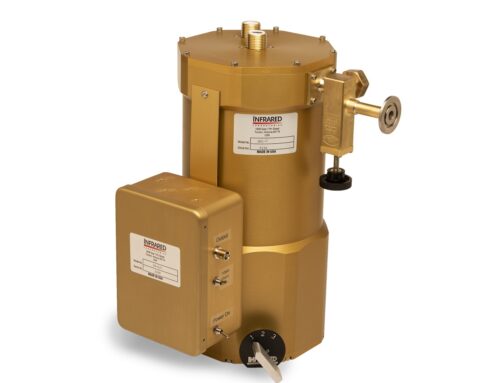
A liquid nitrogen dewar is a specially designed container that stores liquid nitrogen at its extremely low boiling point (-196°C or -320°F or 77°K). Experiments or apparatus can then be attached to the storage vessel. The dewar prevents heat from entering, which reduces evaporation (boil-off) and helps keep the liquid nitrogen usable for longer.
Dewars are built with several key features to minimize heat transfer:
- High Vacuum: Dewars are designed with a very high vacuum (often 10-6 Torr or lower), which reduces the chance of heat transfer by limiting gas molecules inside.
- Radiation Shields: Some dewars have reflective shields inside the vacuum space to block thermal radiation, further lowering heat transfer.
- Specialized Materials: Aerospace grade 6061 aluminum, High purity 101 Copper, various stainless steels and a few super-low conductivity materials are used in the construction of an IRLabs’ dewar. Each is chosen specifically for their strength, durability, and thermal properties.
How Much Does a Liquid Nitrogen Dewar Cost?
The cost of a liquid nitrogen dewar varies depending on:
- Size: Smaller dewars tend to be less expensive than larger ones.
- Temperature: A dewar designed for liquid helium will have specific features that allow it to reach temperatures much colder than a liquid nitrogen dewar.
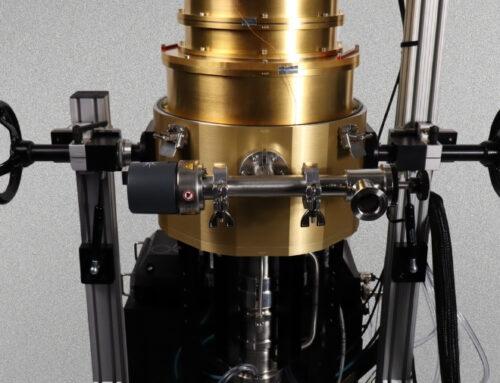
- Customization: Custom-built dewars or those with specific features may have a higher price tag. Custom features can include customer electrical feedthroughs, cryogenic motion control, or customized optics in the dewar.
At IRLabs, we offer a range of dewars to fit different budgets and needs. We recommend contacting us directly for a quote based on your specific requirements. Our team is ready to help you choose the best dewar for your needs.

Safety Considerations
When handling liquid nitrogen, always follow safety protocols:
- Ventilation: Ensure proper ventilation to prevent oxygen displacement, which could lead to asphyxiation.
- Personal Protective Equipment (PPE): Wear insulated gloves, eye protection, and closed-toe shoes.
- Avoid Trapping Nitrogen: Never seal a dewar completely. Pressure buildup can cause an explosion. Always ensure the vent is unobstructed.
- Training: Ensure all personnel handling liquid nitrogen are properly trained.
Liquid nitrogen dewars are indispensable for many industries and applications. Understanding how they work, how to use them safely, and how to choose the right one is crucial. At IRLabs, we are committed to providing high-quality dewars with expert support.
If you have any further questions or need help selecting the right dewar for your needs, contact our team of cryogenic specialists—we’re here to help!