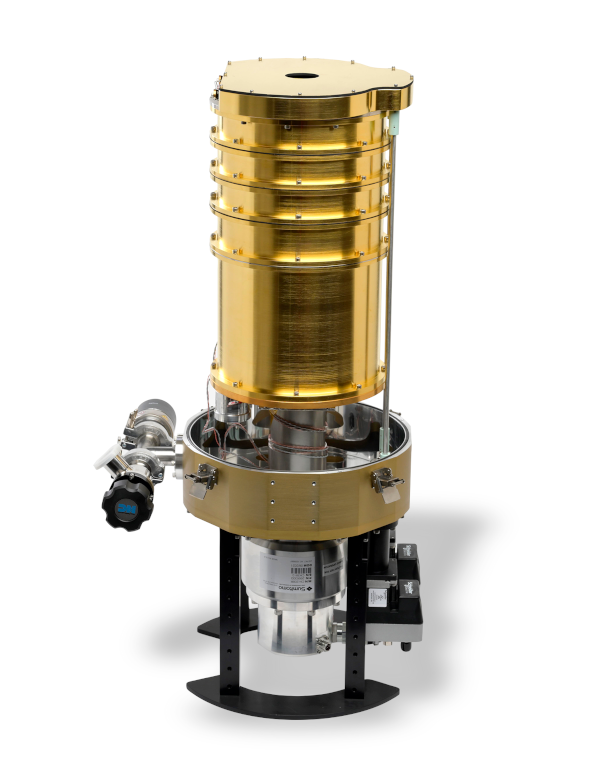
At IR Labs, we specialize in focal plane array (FPA) testing technology, offering cutting-edge solutions for high-performance imaging systems. Our expertise in testing focal plane arrays ensures that you receive precise and reliable components for your advanced imaging needs.
Understanding Focal Plane Arrays in Infrared and Thermal Imaging Applications
What is a Focal Plane Array (FPA) and How Does It Work?
The focal plane array (FPA) stands as a linchpin in modern imaging technology. At its core, an FPA is a sophisticated assembly of radiation detectors, meticulously arranged in a planar grid. These detectors act as individual light or electromagnetic energy sensors, converting incoming photons or energy waves into measurable electronic signals. The density and performance of these detectors directly translate into the resolution and sensitivity of the system. The focal plane is the most critical component in the system’s signal to noise ratio and resultant image clarity.
Why Focal Plane Arrays Are Essential in Infrared and Thermal Imaging
The true versatility of the focal plane array stems from its adaptability across diverse fields. Its ability to capture and process signals from across the electromagnetic spectrum makes it an indispensable tool for various scientific, industrial, and even consumer applications.
Focal Plane Array Applications in Astronomy, Medical, and Thermal Imaging
Astronomy: Focal Plane Arrays for Deep Space Observation
In astronomy, focal plane arrays are the workhorses behind capturing stunning, high-resolution images of celestial objects. By precisely measuring the faint light emanating from distant galaxies, nebulae filled with cosmic dust, and even exoplanets, these arrays help us unravel the mysteries of the universe. The advancements in the sensitivity of focal plane array technology have directly led to groundbreaking discoveries and expanded our understanding of the cosmos.
Thermal Imaging: Focal Plane Arrays for Heat Signature Detection
Focal plane arrays are the foundation of thermal imaging systems, enabling the detection and visualization of temperature variations. This capability has profound implications for security and surveillance applications, allowing professionals to detect intruders in complete darkness, identify potential fire hazards, and monitor critical infrastructure for overheating. In modern drones and security systems with sophisticated infrared sensors, a high density focal plane array is a desired component.
Medical Imaging: How Focal Plane Arrays Improve Diagnostic Detection
Within the realm of medical imaging, focal plane arrays are instrumental in enhancing diagnostic accuracy. From X-ray imaging to advanced modalities like PET (Positron Emission Tomography) and SPECT (Single-Photon Emission Computed Tomography), these arrays enable the capture of detailed anatomical and physiological information. By improving image resolution and sensitivity, doctors can detect subtle anomalies, diagnose diseases earlier, and ultimately, improve patient outcomes using the detail provided by a precisely calibrated focal plane array.
The Future of Focal Plane Array Technology and Scientific Innovation
The focal plane array is not merely a component; it is an enabling technology that continues to drive innovation in imaging across diverse disciplines. As detector technology advances, we can expect even more sophisticated and powerful applications of focal plane arrays to emerge, further expanding our ability to observe, analyze, and understand the world around us.
IRLabs’ FPA Testing Solutions for R&D Labs
High-Performance Detectors
We have the proven experience to design and manufacture your focal plane array testing instrumentation. Our engineers will work directly with you to design a system to solve your unique challenges.
Custom Design
Our team offers comprehensive support for integrating focal plane arrays into your imaging systems. We provide:
● Technical Consultation: Expert advice on selecting and integrating focal plane arrays.
● Custom Solutions: Tailored designs to fit your specific needs.
● Ongoing Support: Continuous assistance to ensure optimal performance.
For more information about our focal plane array solutions or to discuss your specific requirements, contact us today. Our team is ready to assist you in finding the perfect solution for your imaging needs.
Why Choose IRLabs for Focal Plane Array Testing?