IREM-IV Sample Testing: Precision Tools for Failure Analysis
The IREM-IV (Infrared Emission Microscope, version IV) is a specialized instrument designed to detect, localize, and analyze defects in semiconductor devices and other microelectronic components. In failure analysis laboratories, IREM-IV testing provides a critical method for identifying the root causes of device malfunctions by observing the infrared emissions generated by electronic and optical components.
Unlike traditional optical microscopy, which is limited by visible light wavelengths, the IREM-IV operates in the infrared spectrum. This enables it to penetrate packaging materials and silicon layers, making it possible to view activity within complex integrated circuits without destructive decapsulation. As a result, researchers can study faults in packaged devices quickly and with minimal disruption to the sample.
How IREM-IV Works
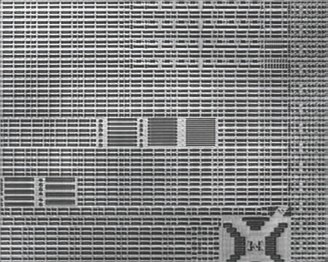
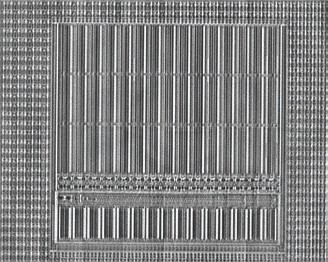
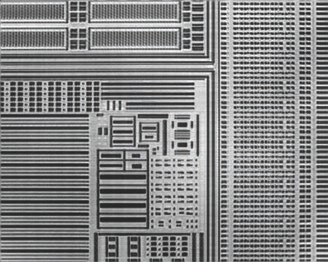
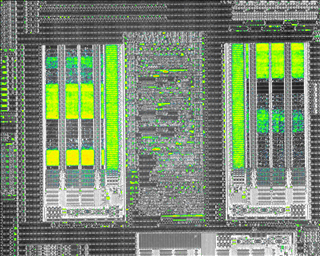
During operation, the IREM-IV detects photon emissions that occur when an energized semiconductor device exhibits leakage currents, hot spots, or junction defects. These infrared photons are captured by a sensitive cooled detector system and then mapped into high-resolution images. This imaging reveals precise fault locations such as short circuits, gate oxide breakdowns, and latch-up events.
The IREM-IV integrates a high-magnification microscope with infrared-sensitive detectors, enabling failure analysis engineers to observe emissions at the micron scale. The system uses liquid nitrogen cooling for its detectors, which significantly improves sensitivity and reduces background noise. This allows detection of extremely low-level emissions, making the tool highly effective even when analyzing subtle or intermittent defects.
Applications of IREM-IV Testing
IREM-IV testing is widely applied in semiconductor failure analysis, quality control, and research and development. Typical applications include:
- Identifying defect sites in integrated circuits during production testing.
- Localizing latch-up and short-circuit events in advanced CMOS devices.
- Investigating power device failures by mapping hot spots.
- Supporting root cause analysis in reliability studies of packaged components.
By combining non-destructive analysis with high sensitivity, the IREM-IV shortens troubleshooting cycles and reduces the risk of losing valuable samples during testing.
Effectiveness and Advantages
The effectiveness of IREM-IV sample testing comes from its ability to detect failures that are otherwise invisible to standard electrical probing or optical inspection. By sensing photon emissions, the system can identify extremely small leakage sites that might later develop into catastrophic failures if left unaddressed.
Another key advantage is speed. Because the IREM-IV can analyze packaged devices without requiring extensive preparation, failure analysis teams can quickly diagnose issues and provide feedback to design or production teams. This shortens time-to-resolution and helps reduce manufacturing costs associated with defective runs.
Compared to destructive methods, IREM-IV testing preserves the integrity of the device, allowing for further analysis or retesting if needed. For organizations working with high-value or limited-quantity devices, this non-destructive approach is particularly valuable.
Help us solve your challenge of detecting faults in complex integrated circuits.
We offer a free test of your device using the IREM-IV and will review the results with you.
Here are a few of the items we would need to receive to perform the test:
- Device
- Instructions on how to power it
- Areas of interest
- Device and process node size
- Silicon backside thickness
- Confidentiality or non-disclosure agreements
Once the test is complete, we will schedule a call with you to review the results.
We’re also happy to schedule a remote session for you to observe the test, or we can schedule a time for you to visit our lab if you would like firsthand experience running the IREM-IV system.
Please complete the form below and we will contact you to discuss your device and testing requirements.