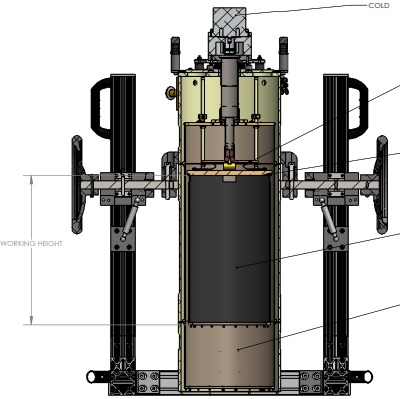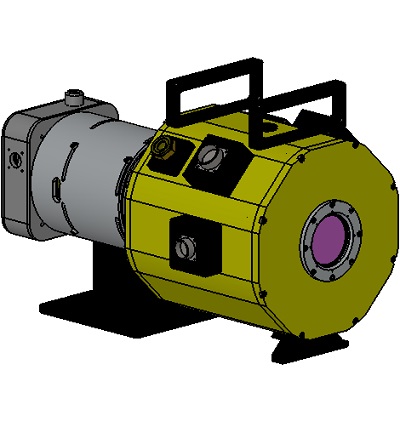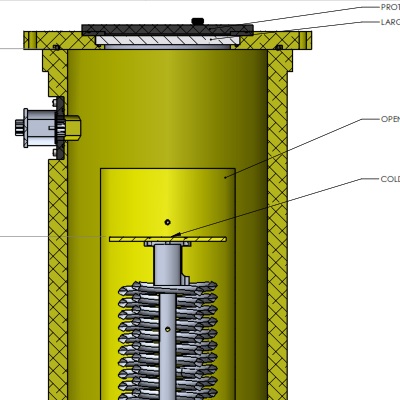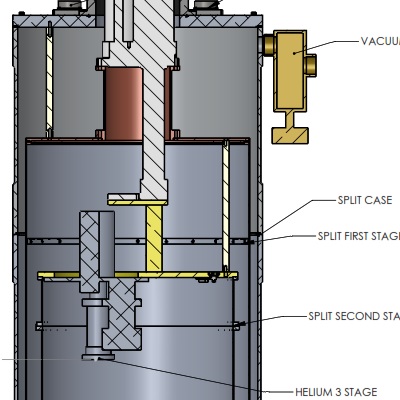
At IRLabs, we deliver state-of-the-art cryocooler solutions through our cutting-edge cryogen-free refrigeration systems. These advanced platforms provide precise temperature control and reliable cooling for demanding applications spanning scientific research, industrial processes, quantum computing, and advanced materials characterization.
What is a Cryocooler?
A cryocooler is a mechanical refrigeration device engineered to achieve and maintain ultra-low temperatures without requiring liquid cryogens such as liquid helium or liquid nitrogen. Unlike traditional cryogenic systems that depend on consumable cryogens, our cryogen-free refrigerators employ advanced closed-cycle cooling technologies—including pulse tube and Gifford-McMahon (GM) refrigerators—to deliver stable, precise temperature control from room temperature down to < 3K.
Switching from open-cycle to closed-cycle cooling marks a major advance in low-temperature research and industrial use, removing the costs and supply issues tied to liquid cryogens.
Core Cryocooler Applications
IRLabs cryocoolers serve critical functions across multiple sectors:
Scientific Research & Development
- Quantum computing and qubit characterization
- Condensed matter physics experiments
- Superconducting device testing
- Infrared detector calibration
- Magnetic resonance and NMR spectroscopy
- X-ray and particle detector cooling
Industrial & Commercial Applications
- Semiconductor manufacturing and testing
- Aerospace sensor systems
- Medical imaging equipment (MRI, cryotherapy)
- Telecommunications infrastructure
- Materials science and metallurgy research
- Cryogenic sample storage
Key Features of IRLabs Cryocoolers
High-Performance Cooling Architecture
Our cryocooler systems deliver exceptional thermal performance through precision-engineered components and advanced control systems:
Ultra-Low Temperature Capabilities
- Intermediate temperature stages from 2K to 4K for general cryogenic applications
- Customizable temperature platforms to match specific experimental requirements
- Rapid cool-down times minimizing downtime between experiments
Unmatched Temperature Stability
- Thermal stability within millikelvin ranges for sensitive measurements
- Advanced PID control algorithms with programmable temperature profiles
- Minimal temperature fluctuations ensuring reproducible experimental conditions
- Real-time monitoring and data logging capabilities
Superior Cooling Power
- High heat lift capacity at various temperature stages
- Optimized for both steady-state and dynamic thermal loads
- Scalable cooling power to accommodate diverse sample sizes and configurations
Cryogen-Free Technology Advantages
IRLabs’ cryogen-free refrigerators fundamentally transform laboratory operations by eliminating dependence on liquid cryogens:
Operational Cost Reduction
- Elimination of recurring liquid helium or nitrogen purchases—particularly significant given helium supply constraints and price volatility
- No boil-off losses or cryogen transfer inefficiencies
- Reduced infrastructure requirements (no need for cryogen storage dewars or transfer systems)
- Predictable, electricity-based operating costs enabling accurate budget forecasting
Enhanced Operational Reliability
- Continuous operation independent of cryogen supply chains and delivery schedules
- No interruptions due to cryogen depletion or supply shortages
- Automated operation with minimal user intervention
- Maintenance-free operation for extended periods (thousands of hours between service intervals)
Safety & Environmental Benefits
- Elimination of asphyxiation hazards associated with cryogen use in confined spaces
- No risk of cryogenic burns during cryogen handling
- Reduced environmental impact through lower resource consumption
- Compliance with increasingly stringent laboratory safety regulations
Simplified Logistics
- Plug-and-play installation requiring only electrical power and cooling water (where applicable)
- No specialized cryogen handling training required for operators
- Easier laboratory planning and equipment relocation
Compact and Efficient Design
IRLabs cryocooler systems are engineered with space efficiency and energy performance as core design principles:
Space-Optimized Architecture
- Compact footprint integrating cooling engines, vacuum systems, and control electronics
- Vertical or horizontal mounting configurations to suit various laboratory layouts
- Modular design enabling integration with existing experimental setups
- Easy access to sample space and experimental insert mounting
Energy-Efficient Operation
- Optimized thermodynamic cycles minimizing electrical power consumption
- Variable-speed compressor operation adapting to thermal load conditions
- High coefficient of performance (COP) relative to refrigeration capacity
- Reduced heat rejection requirements simplifying facility cooling infrastructure
Advanced Vibration Management
- Low-vibration pulse tube cryocoolers for vibration-sensitive measurements
- Flexible vibration isolation mounting options
- Remote compressor configurations minimizing vibrations at sample location
- Vibration levels compatible with high-resolution microscopy and spectroscopy
Cryocooler Technical Specifications & Performance
IRLabs offers multiple cryocooler platforms optimized for different application requirements:
Temperature Range Coverage
- Ultra-low temperature: 1.5K – 4K (pulse tube and GM cryocoolers)
- Low temperature: 10K – 80K (single-stage cryocoolers)
- Customizable multi-stage systems with intermediate temperature platforms
Cooling Capacity
- Milliwatt to multi-watt cooling power at 4K, depending on system configuration
- Higher cooling power at elevated temperatures (10K-100K range)
- Multiple cooling stages supporting simultaneous experiments at different temperatures
System Integration Features
- Standard vacuum flanges (CF, KF) for easy experimental integration
- Multiple ports for electrical feedthroughs, optical access, and gas handling
- Compatible with industry-standard temperature controllers and data acquisition systems
Why Choose IRLabs Cryocoolers?
Proven Reliability: With decades of experience in cryogenic systems, IRLabs delivers proven solutions backed by comprehensive technical support and application expertise.
Customization Capabilities: We work closely with researchers and engineers to configure systems meeting specific experimental requirements, from sample mounting geometries to specialized temperature profiles.
Comprehensive Support: Our team provides end-to-end support including system selection consultation, installation assistance, operator training, and responsive technical service throughout the product lifecycle.
Continuous Innovation: IRLabs invests in ongoing research and development to incorporate the latest advances in cryogenic technology, ensuring our customers have access to cutting-edge performance and capabilities.
Total Cost of Ownership: Cryogen-free systems may have a higher upfront cost than traditional bath cryostats, but they eliminate cryogen expenses and typically deliver a positive ROI within 1-3 years. Over their 10+ year lifespan, IRLabs systems continue to provide significant long-term cost savings.
Getting Started
Selecting the optimal cryocooler for your application requires careful consideration of temperature requirements, cooling capacity, sample size, measurement techniques, and integration constraints. IRLabs’ technical specialists are available to discuss your specific needs and recommend the most appropriate solution from our comprehensive product portfolio.
Contact IRLabs today to discover how our advanced cryogen-free cryocoolers can enhance your research capabilities, reduce operating costs, and provide the ultra-low temperature environment your applications demand.

Contact Us Today
Get started on selecting the right system. Our systems decision tree will help you understand the possible configurations for your application. When you’re ready, contact us to discuss your project’s requirements.