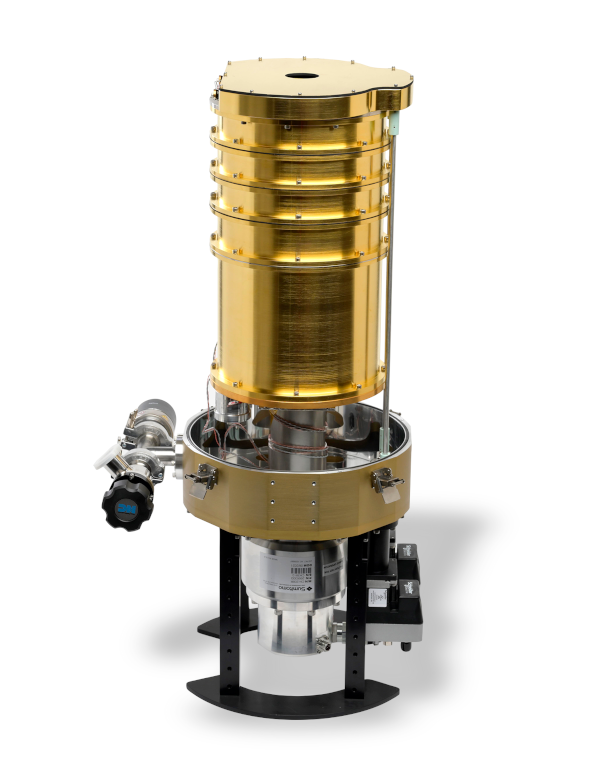
Cryostat Solutions for Research & Industry

Leaders in Low-Temperature Physics & Cryostats

Cryostats2025-12-11T10:51:10-07:00

IRLabs brings over 50 years of expertise in low-temperature physics to cryostat design and manufacturing. We understand that while performance is crucial, managing costs is equally important for our clients’ success.

Our cryostats serve diverse applications worldwide, including:

  • IR detection and imaging

  • Focal point array testing

  • Low-temperature physics experiments

  • OEM integration

Whether you need a custom design or a standard solution, we work closely with you to deliver high-performance cryostats that meet your exact temperature requirements while staying within budget.

IRLabs has a proven track record, from designing and manufacturing the cryostat for the  Large Binocular Telescope at Mt. Graham, Arizona, to retrofitting NASA’s Mid-IR Spectrometer and Imager (MIRSI) ln2 dewar into a cryo-free cryocooler. Our cryostats are engineered for success in even the most challenging low-temperature environments.

What is a Cryostat?

A cryostat is a device used to maintain extremely low temperatures for scientific instruments, components, or experiments—often reaching below 4 Kelvin. In photonics and quantum research, cryostats are essential for reducing thermal noise and enabling the performance of ultra-sensitive detectors and systems, such as infrared sensors and superconducting devices. At IRLabs our cryostats provide the stable, cryogenic environment necessary for cutting-edge infrared sensing and quantum technology applications.

Find the Right Cryostat for Your Temperature Range
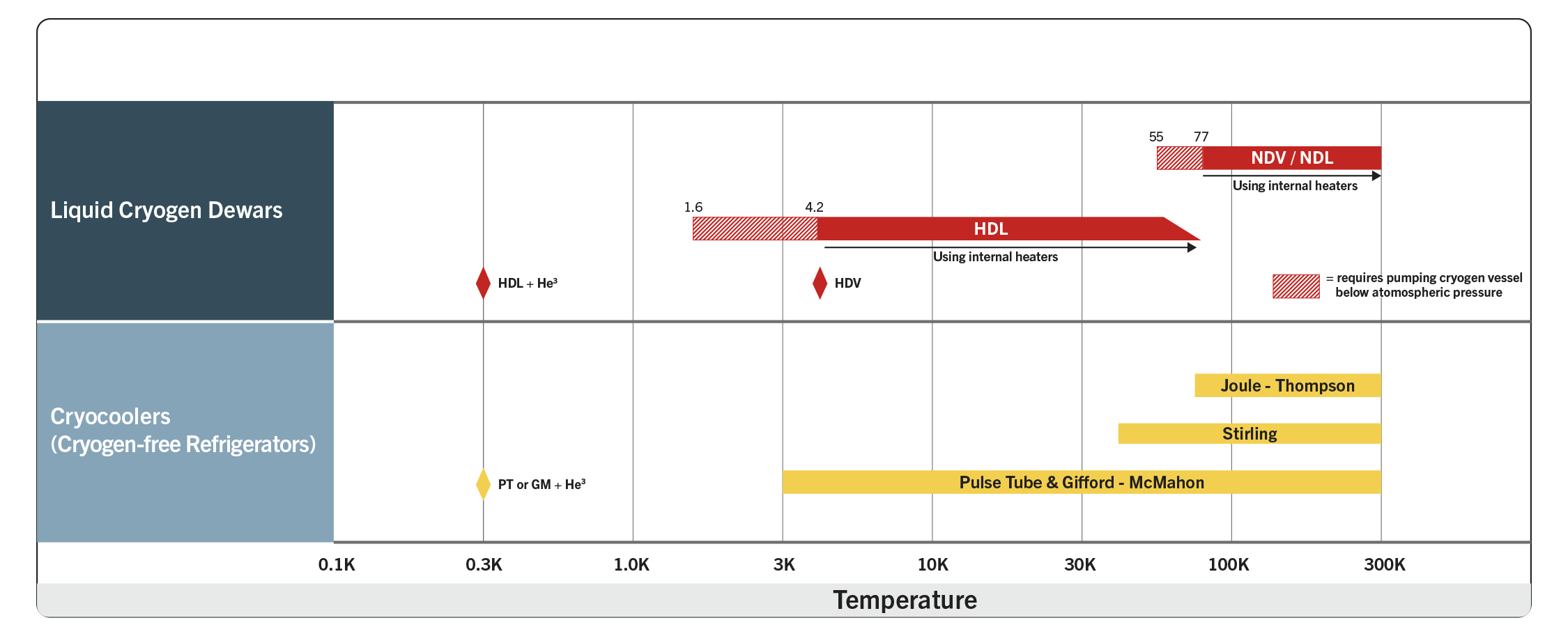
Temperture chart for cryostats

Why Choose a Cryostat from IRLabs?

  •  Wide selection: Temperature ranges extend from mK to room temperature and available in several standard sizes

  •  Cryo-free options: Liquid nitrogen cryogen dewars and mechanically cooled cryogen-free refrigerator options

  • Reduce costs:  Standard cryostat package can be used as a baseline

  • Minimize cryogenic consumption and maximize thermal conductivity: Efficient cryogen use and closed cycle cryostat options

  • Reliability: Vibration isolation enables the most vibration sensitive applications

  • Flexibility: Standard cryostats can be used for more than one specific application or test

  • Ease of operation: Time-tested ergonomic designs

  • Customizable: Custom case designs and workspaces are also available

  • Successful operation:  50 years of cryostat design and manufacturing experience for successful operation

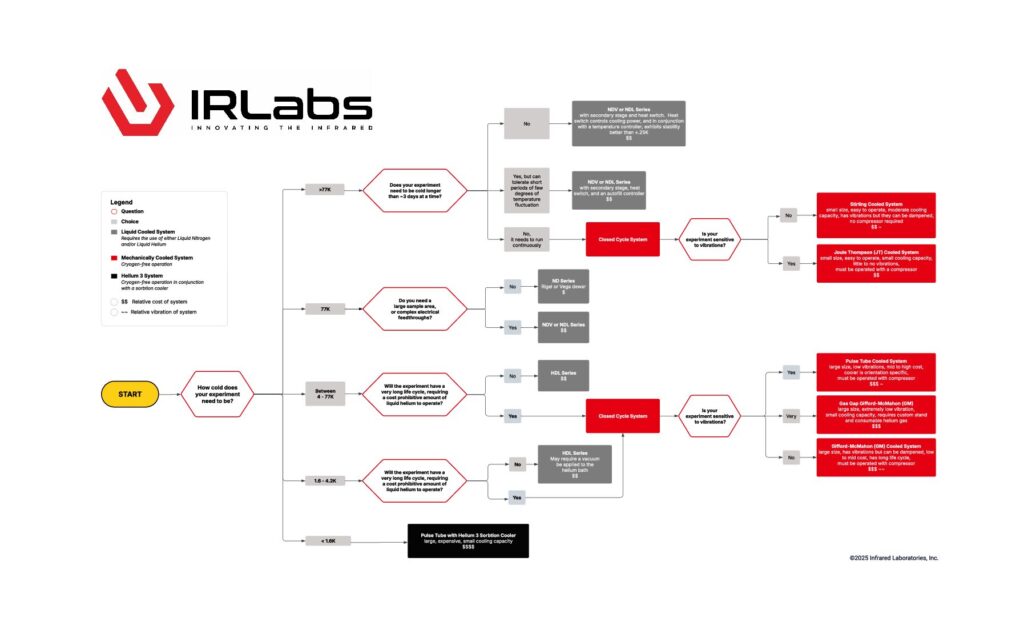
Systems Decision Tree

Get started today—use this tool to select the right system for your application.

Contact Us Today

Get started on selecting the right system. Our systems decision tree will help you understand the possible configurations for your application. When you’re ready, contact us to discuss your project’s requirements.

Cryostat Cooling Options: Liquid vs. Cryogen-Free

Choosing the right cryostat is critical for low-temperature research, testing, or failure analysis. IRLabs offers both liquid cryogen dewars and cryogen-free cryostats, each with distinct advantages depending on your application, budget, and operational needs.

Liquid Cryogen Dewars: Proven, Simple, Reliable

How they work: Vacuum-insulated vessels holding liquid nitrogen (77K) or helium (4.2K).

  • Pros: Low initial cost, vibration-free, rapid cool-down, simple operation with no moving parts.
  • Cons: Requires regular cryogen replenishment, ongoing operating costs, dependence on supply, limited unattended runtime.

Cryogen-Free Cryostats: Continuous Operation, Lower TCO

How they work: Mechanical refrigeration using closed-cycle helium cryocoolers (Gifford-McMahon or pulse tube).

  • Pros: No cryogen handling, predictable energy-based operating costs, 24/7 unattended operation, safer and cleaner lab environment.
  • Cons: Higher initial investment, longer cool-down (6–12 hours), small vibrations from moving parts, requires periodic maintenance, may require higher-voltage or 3-phase power, and in some models, water cooling for compressor heat rejection.

Making the Right Choice

  • Choose liquid nitrogen dewars when vibration sensitivity is critical, usage is intermittent, rapid cool-down is required, or facility already supports cryogen handling.
  • Choose cryogen-free cryostats when continuous operation, lower long-term costs, unattended operation, and lab safety are priorities.

IRLabs provides both technologies and can recommend the best option based on temperature requirements, thermal load, sample access, vibration tolerance, and operational patterns.
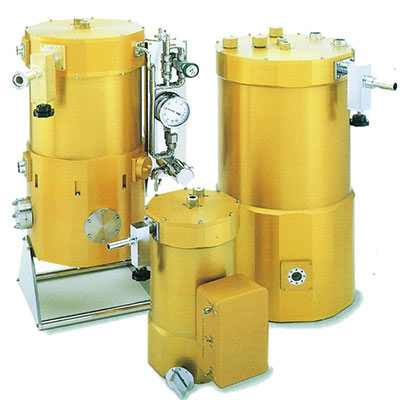
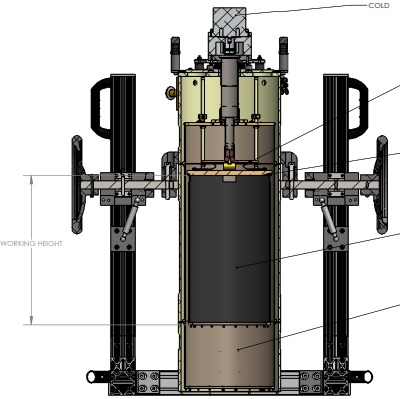
Cryostats

Liquid Cryogenic Dewars

Liquid cryogen dewars are compact with no moving parts, easy to use, and have a lower initial cost. Recommended for simple, reliable operation:

  • Use LN2 and LHe
  • Simple, compact cooling solution
  • Lower cost of equipment
  • No mechanical noise and vibration
  • No bulky compressor and hoses
  • High reliability
Hybrid System

Cryogen-Free Cryostats

Refrigerated systems are larger, more complex, and have a higher initial cost but eliminate the expense of refilling cryogens. Recommended for cost-effective, continuous unattended cold operation:

  • Uses mechanical refrigeration
  • No expensive LHe
  • Continuous operation with no refilling required
  • Reliable; no unexpected warmups
  • Acceptably low vibration in most cases

Custom Cryostat Design

If you need custom design, we work closely with you to deliver a cryogenic system to meet your exact temperature requirements.

Optical, Mechanical and Cryo/Vacuum Accessories

IRLabs offers a variety of standard accessories for integration on your system.

FAQs

What is a cryostat used for?2025-10-28T08:07:37-07:00

A cryostat is used to maintain extremely low temperatures for scientific experiments and industrial applications. Researchers use cryostats for materials testing, superconductivity studies, infrared detector cooling, and other precision experiments that require stable cryogenic environments.

How does a cryostat differ from other cooling systems?2025-10-28T08:10:21-07:00

Unlike standard refrigeration systems, cryostats are engineered to reach cryogenic temperatures below 120 Kelvin. They use either liquid cryogens (such as liquid helium or nitrogen) or cryogen-free cooling technology to provide precise and consistent thermal control.

What types of cryostats are available from IRLabs?2025-10-28T13:46:51-07:00

IRLabs offers both liquid cryogenic and cryogen-free cryostats. Options include liquid cryogenic dewars for traditional cooling methods and advanced cryogen-free cryostats for laboratories that need lower operating costs, simplified handling, and long-term stability.

Can cryostats be customized for specific research needs?2025-10-28T13:46:22-07:00

Yes. IRLabs designs and manufactures custom cryostats tailored to your experiment or application. Systems can be configured with specialized optical, mechanical, or vacuum accessories to meet unique requirements in research or industrial environments.

What should I consider when selecting a cryostat?2025-10-28T13:46:39-07:00

When choosing a cryostat, consider factors such as target temperature range, cooling method (liquid cryogen vs. cryogen-free), sample size, experimental setup, and required accessories. IRLabs provides a cryostat selection guide and expert consultation to help match the right cryo-solution to your research needs.

Go to Top