Cryogenic research and technology have transformed fields from space exploration to quantum computing. At the center of this progress lies a highly specialized technology: the cryocooler. These compact cryogen-free refrigeration systems reach temperatures below 120 Kelvin without the need for constant supplies of liquid cryogens. Understanding how cryocoolers work, the designs available, and where they are applied helps researchers and engineers make informed choices for their laboratories and projects.
What Cryocoolers Do and Why They Matter
A cryocooler is essentially a mechanical refrigerator engineered to achieve cryogenic temperatures. Instead of relying on external tanks of liquid helium or liquid nitrogen, cryocoolers use closed-cycle thermodynamic processes to remove heat from a system. By doing so, they eliminate the cost, handling, and logistical challenges of traditional cryogenic liquids.
For industries such as infrared imaging, superconductivity, and aerospace, cryocoolers make high-performance instruments smaller, lighter, and more reliable. They provide stable operation, minimize maintenance, and reduce dependency on consumables.
The Thermodynamic Principles Behind Cryocoolers
All cryocoolers function by cycling a working gas, often helium, through compression, cooling, and expansion stages. This process transfers heat away from the cold tip where the experiment, sensor, or detector is located.
The efficiency of the cycle depends on reducing thermal losses, minimizing vibration, and optimizing materials. Because cryogenic applications often involve sensitive detectors, small variations in stability can dramatically impact performance. That is why modern cryocoolers use advanced control systems to ensure consistent temperature regulation.
Main Cryocooler Designs
Several types of cryocooler designs dominate the market today. Each serves different applications depending on cooling power, vibration requirements, and temperature goals.
Stirling Cryocoolers
Stirling cryocoolers operate based on the Stirling thermodynamic cycle and use a piston-driven system with oscillating pressure waves to compress and expand helium gas. They are compact, efficient, and widely used for cooling infrared sensors and portable devices. Their relatively simple design makes them cost-effective and reliable, and are favored in applications requiring efficiency and reliability over long periods of time.
Pulse Tube Cryocoolers
The pulse tube cryocooler is a newer design that removes moving parts from the cold region. This results in far lower vibration compared to Stirling systems, which is critical for imaging and superconducting systems where mechanical disturbances can disrupt data. While pulse tube cryocoolers are slightly more complex to engineer, they are increasingly the design of choice for long-duration missions such as space telescopes.
Gifford-McMahon Cryocoolers
The Gifford-McMahon design has long been a workhorse of laboratory cryogenics. This reciprocating system uses rotary valves (instead of a piston mechanism found in the Stirling cryocooler) to modulate helium gas flow and can deliver high cooling power down to low temperatures. These systems are durable but can introduce vibration and require more maintenance than pulse tube models.
Joule-Thomson Cryocoolers
The Joule-Thomson effect provides another path to cryogenic cooling. Depending on system requirements, high-pressure gasses / gas blends are expanded through a valve, producing rapid cooling. These systems are simple in concept but often need precooling stages for efficiency. They are sometimes combined with other cryocooler types to achieve very low temperatures.
How Cryocoolers Compare to Liquid Helium Systems
Before cryocoolers, laboratories and observatories relied heavily on liquid helium and/or liquid nitrogen to achieve cryogenic temperatures. While effective, this method has several drawbacks. Helium is a finite resource with rising costs and supply risks. Handling cryogens also requires specialized training and infrastructure.
Cryocoolers offer a solution by reducing or eliminating dependence on liquid helium. They provide continuous cooling with little intervention, making them practical for both ground-based laboratories and remote applications like satellites. For many institutions, cryocoolers mean fewer interruptions, lower costs, and more consistent results.
Applications in Modern Science
Cryocoolers play a central role across a wide range of research and industrial domains.
- Infrared imaging: Cooling infrared detectors reduces thermal noise, enabling highly sensitive imaging in astronomical observatories, military thermal imaging, and environmental monitoring.
- Superconductivity: Most superconducting materials require cryogenic temperatures. Cryocoolers provide stable environments for experiments in quantum computing and advanced electronics. Superconducting magnets used in technologies like MRI or particle accelerators require temperatures as low as 4K to maintain their superconducting state.
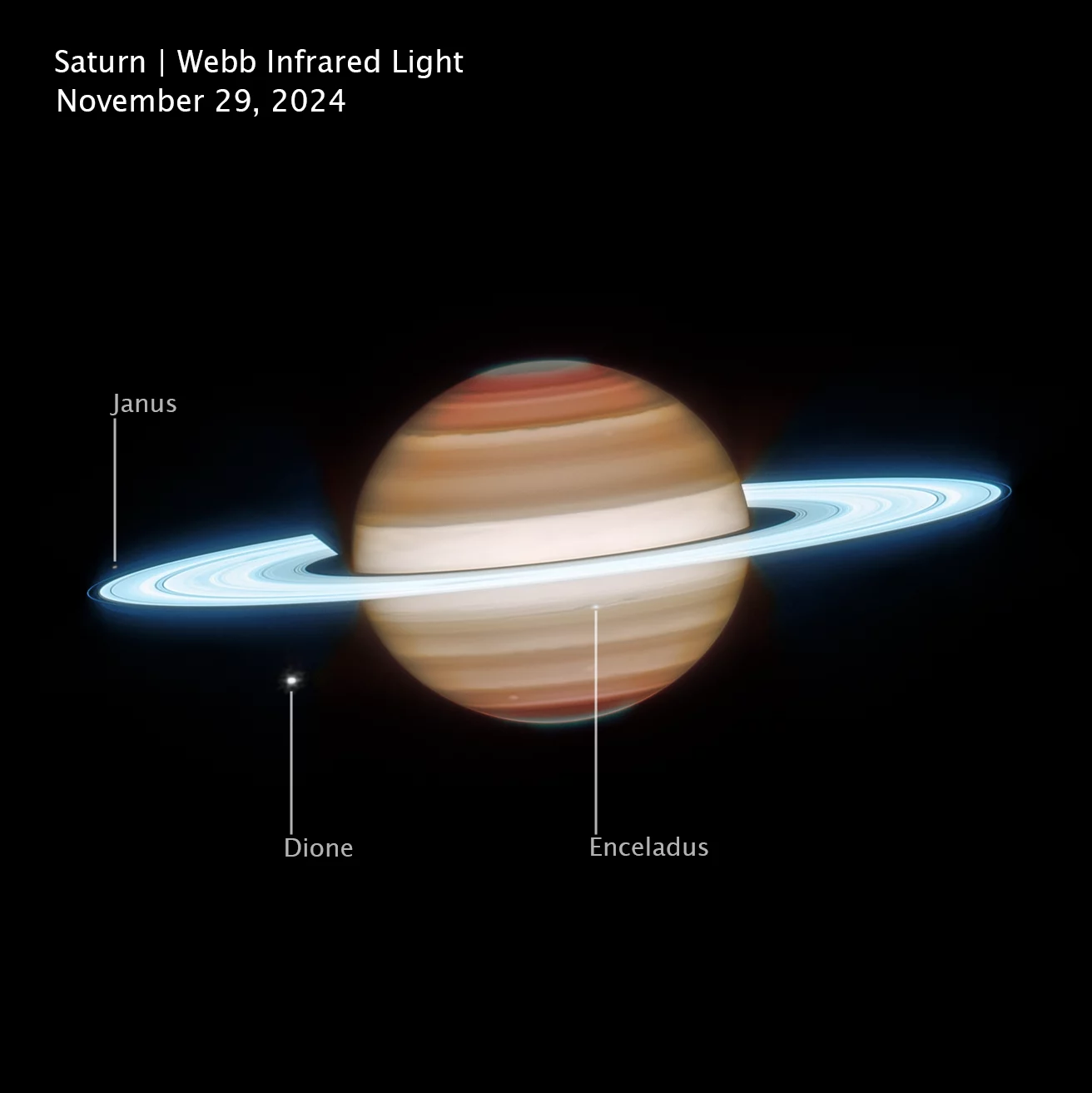
- Space exploration: Satellites and telescopes often use pulse tube cryocoolers to maintain detector performance over long missions where resupplying cryogens is impossible. Cryocoolers on these missions need to meet strict low mass, low power, and reliability requirements. (Hubble / JWST)
- Medical imaging: In some cases, cryocoolers assist in magnetic resonance imaging (MRI) and related technologies by maintaining superconducting magnets.
- Materials testing: Cryocoolers create controlled low-temperature conditions for evaluating structural, mechanical, and electronic properties.
The Future of Cryocooler Development
Research continues to push cryocoolers toward higher efficiency, lower vibration, and miniaturization. Advanced materials and manufacturing methods are improving thermal performance while reducing system weight. Hybrid systems combining different cooling principles are emerging to address ultra-low temperature needs.
To address the growing need for smaller, more efficient cryocoolers in infrared technology, researchers are investigating nano-engineered materials, quantum dots, and microcryocooler technologies. Carbon nanotubes and graphene are improving heat transfer efficiency, while quantum dots are being explored for their potential to enhance thermal management in infrared sensors. Additionally, MEMS-based cryocoolers and microchannel heat exchangers are paving the way for ultra-compact cryogenic systems ideal for space-based infrared telescopes and portable IR detectors. These advances promise more efficient, lightweight, and low-vibration systems, making them perfect for infrared research and field applications.
As demand for cryogenic environments grows in quantum technologies, aerospace, and medical research, cryocoolers are expected to become even more widely adopted. Their combination of reliability, reduced operating costs, and adaptability positions them as a cornerstone technology of modern science.
Ready to begin your next project? Connect with the team at IRLabs to get started.