Selecting the right liquid nitrogen dewar can make the difference between smooth, efficient experiments and constant interruptions for refills, temperature fluctuations, or accessibility problems. A dewar that works well for one lab setup may create headaches in another, and rushing the selection process often leads to costly compromises.
This guide walks through the practical factors that matter when choosing a liquid nitrogen dewar, including a decision framework, specifications to evaluate, and mistakes that commonly trip up researchers and procurement teams.
What actually matters when selecting a dewar
Dewars hold liquid nitrogen at around -196°C and maintain that temperature through vacuum insulation, similar to a high-performance thermos. While the basic principle is straightforward, real-world performance depends on factors like static hold time, neck diameter, capacity, construction quality, and how the dewar integrates with your experimental setup.
The right dewar balances cryogen efficiency, usability, and the specific demands of your application, whether that is detector cooling, sample preservation, materials testing, or component characterization.
Decision tree: start with your use case
Step 1: Define your primary application
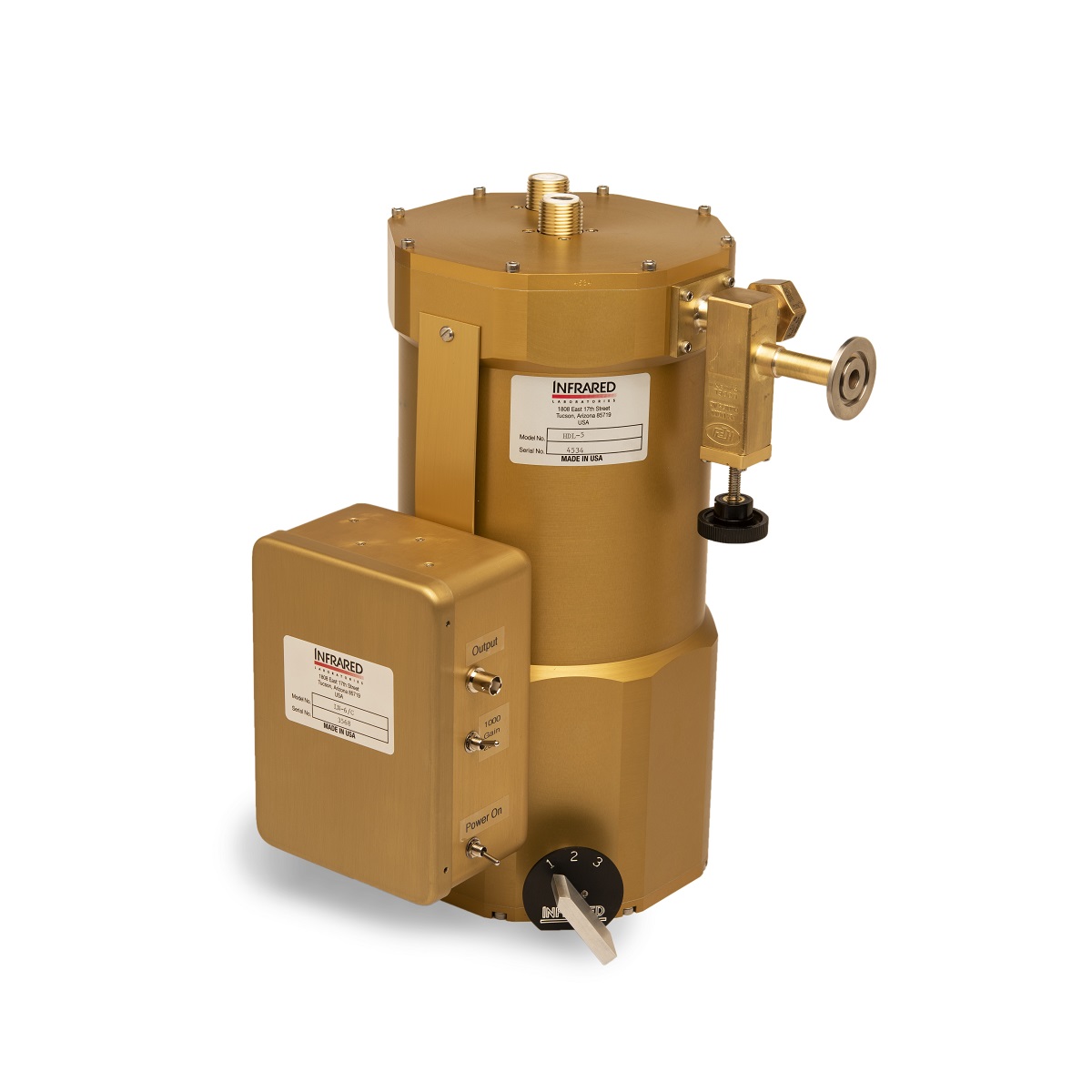
Detector or sensor cooling (IR, CCD, InGaAs, MCT, InSb)
Priority: Stable temperature, minimal vibration, optical access if needed
Typical size: Small to mid-capacity (120 mL to 3 L) with custom cold plate or mounting interface
Materials or component testing
Priority: Flexibility for test fixtures, temperature control, ability to cycle samples
Typical size: Variable; often 3 to 14 inch diameter cold plates for open-cycle systems
Sample storage or preservation
Priority: Maximum hold time, wide neck for easy sample access, capacity to match sample volume
Typical size: 10 L to 50 L+ with wide neck (80 mm+)
Cryogen transfer or transport
Priority: Durability, portability, evaporation rate during transit
Typical size: Pressurized or dry shipper models; 10 L to 50 L range

Step 2: Calculate capacity and refill frequency
Estimate your daily liquid nitrogen consumption based on hold time and evaporation rate. A dewar with a 9-hour static hold time will need refilling roughly twice per workday if experiments run continuously.
If your lab operates around the clock or accessibility is limited, prioritize larger capacity or better insulation to extend hold time and reduce refill cycles.
Step 3: Evaluate neck diameter and accessibility needs
Neck diameter directly impacts how you interact with the dewar. Narrow necks (under 50 mm) reduce evaporation loss but make sample insertion, retrieval, and cleaning difficult. Wide necks (80 mm to 125 mm+) are essential for rack systems, frequent sample handling, or any application requiring repeated access.
Consider whether you need to fit probes, sensors, or custom fixtures through the neck, and confirm clearances before ordering.
Step 4: Match construction and accessories to your environment
Material options:
Stainless steel dewars offer durability and longer service life (8+ years of vacuum performance), while aluminum models are lightweight but may be less robust in high-use or transport scenarios.
Common accessories:
- Windows for optical access (essential for IR detector applications)
- Liquid level sensors or alarms to prevent run-dry conditions
- Custom cold plates, mounting flanges, or vibration isolation hardware
- Pressure relief valves and venting systems for safety
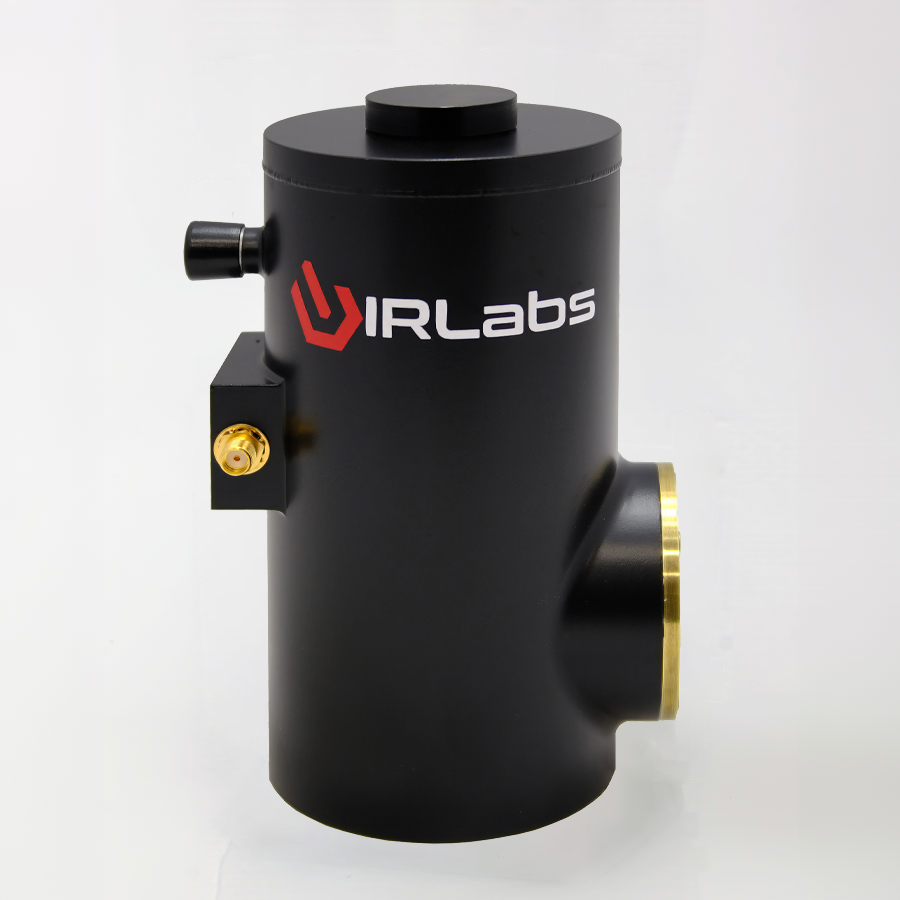
IRLabs offers customization options to tailor dewars to specific test or instrument requirements, including multi-layer insulation, cryogenic getters, and extended hold time designs.
Common mistakes when selecting a liquid nitrogen dewar
Mistake 1: Underestimating the need for custom features
Standard catalog dewars may not provide the optical access, mounting geometry, or vibration isolation your experiment requires. Custom cryogenic solutions are often necessary for detector cooling, spectroscopy, or precision measurement applications where off-the-shelf options fall short.
Mistake 2: Selecting a dewar without considering safety and monitoring
Liquid nitrogen can displace oxygen and create asphyxiation hazards in poorly ventilated spaces. Pressure relief valves, low-level alarms, and proper venting are not optional accessories in many lab environments.
Mistake 3: Buying based on price alone
The lowest cost dewar often becomes the most expensive when factoring in excessive cryogen consumption, frequent refills, downtime, or the need for premature replacement. Invest in quality insulation, durable construction, and features that match your operational needs.
Quick reference: dewar specifications checklist
Before finalizing your selection, confirm:
- Capacity matches your daily LN2 consumption and refill access
- Static hold time meets your operational schedule
- Neck diameter accommodates your samples, probes, or fixtures
- Material and construction suit your usage intensity and environment
- Accessories (windows, sensors, cold plates, isolation) are included or available
- Safety features (pressure relief, venting, monitoring) meet lab requirements
When to consider a custom dewar
Standard catalog dewars work well for common applications, but custom designs become necessary when you need precise cold plate geometry, optical access for detector systems, extreme vibration isolation, or integration with specialized instruments. IRLabs has designed custom liquid nitrogen dewars for projects ranging from upper atmospheric research to infrared detector cooling for astronomy.
If your application demands more than an off-the-shelf solution, working with an experienced cryogenics partner ensures your dewar delivers the performance, reliability, and efficiency your research requires.
Ready to begin your next project? Connect with the team at IRLabs to get started.