Cryogenic cooling is at the heart of cutting-edge science — from quantum computing to infrared astronomy. Cryocoolers are the workhorses that deliver the ultra-low temperatures and cryostats are the insulated vessels that maintain those cryogenic temps. But just how cold is cryogenic? And why are cryogenic systems so essential for sensitive applications?
In this article, we’ll explore cryocoolers and cryostats, how they work, and what types of cryogenic solutions IRLabs offers for high-performance, low-temperature environments.
What Defines Cryogenic?
The term cryogenic refers to extremely low temperatures, typically below 120 Kelvin (-153°Celsius), where the behavior of materials and systems begins to change significantly. At these ultra-low temperatures, thermal energy is greatly reduced — which is essential for enabling low-noise environments, reducing thermal drift, and supporting phenomena like superconductivity and infrared detection.
Cryogenic systems often operate at these key temperatures:
- Liquid nitrogen (LN2) boils at 77 K (-196°C) and is often used for passive or initial cooling.
- Liquid helium (LHe) boils at 4.2 K (-269°C), enabling applications requiring ultra-low temps.
- Closed-cycle cryocoolers can reach and maintain temps across this range without needing liquid cryogens, making them ideal for long-duration, low-maintenance applications.
Operating in a cryogenic environment requires more than just getting cold — it’s about keeping instruments thermally stable and mechanically isolated (i.e., minimizing vibrations or other mechanical disturbances). Even small fluctuations in temperature or vibration can impact the performance of infrared sensors, superconducting devices, or other precision instruments.
That’s why systems designed for cryogenic operation — such as cryostats, dewars, and cryocoolers — must work in concert. Together, they manage everything from thermal insulation and cooldown rates to continuous cooling and component integration, ensuring reliable performance in demanding research and engineering environments.
What Is a Cryocooler?
A cryocooler is a mechanical refrigeration system that can achieve cryogenic temperatures that are typically below -150°C (or 123 K) — without using liquid cryogens like LN2 or helium. Using a closed thermodynamic cycle, such as Stirling, Gifford-McMahon, or pulse-tube, a cryocooler compresses and expands a working gas (typically helium) to remove heat from a cold stage and reject it to the ambient environment.
Cryocoolers are self-contained and small in size (i.e., they usually can fit on a tabletop) but are large in cooling power. They are ideal for continuous operation in systems that require minimal maintenance or are deployed in environments where cryogen refilling is impractical (e.g., remote observatories, aerospace, field-deployed instruments).
What Is a Cryostat?
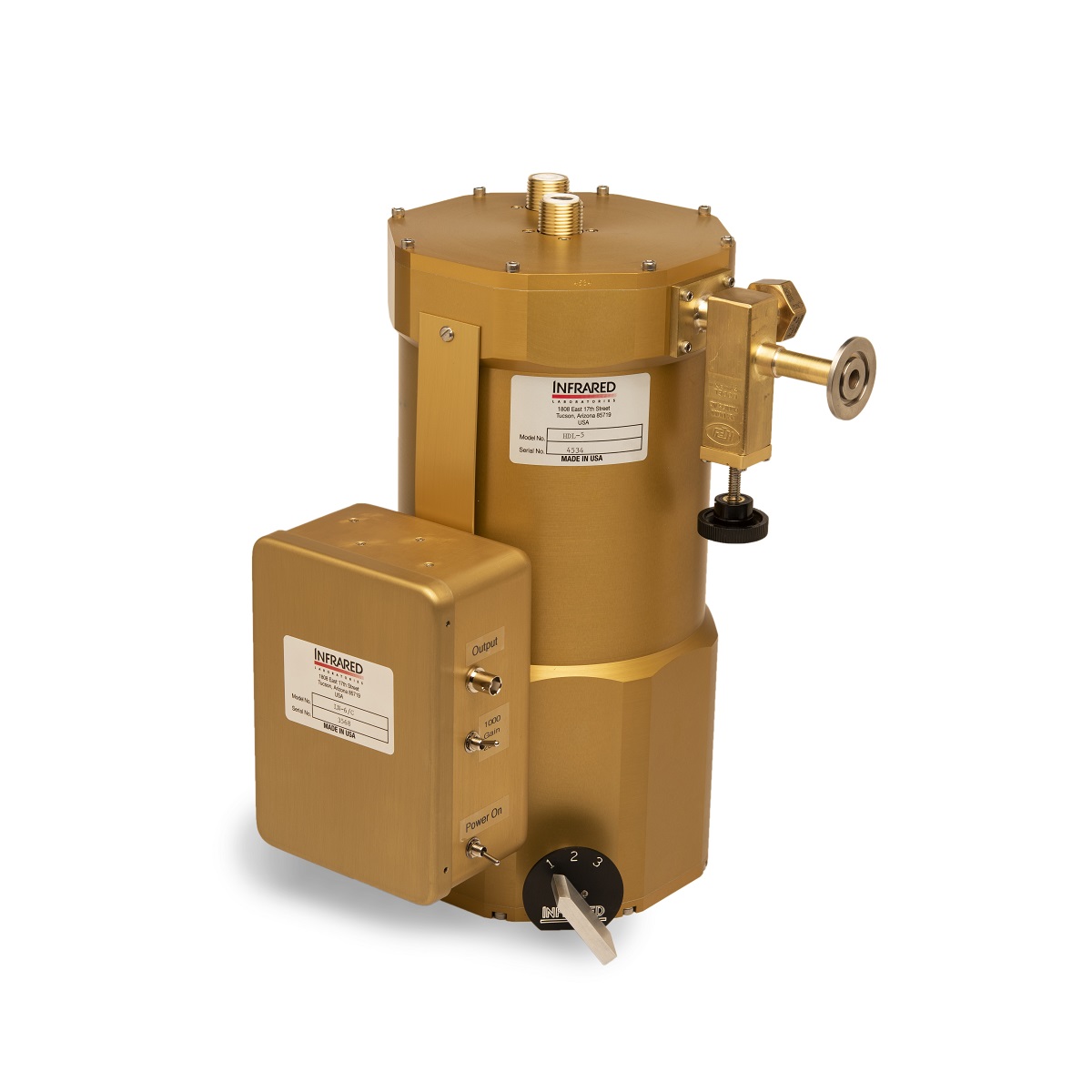
Cryostats are thermally insulated chambers or containers designed to maintain a stable cryogenic environment around a sample, detector, or component. It houses and supports:
- The cold stage (often cooled by a cryocooler or cryogen)
- Thermal shielding
- Vacuum insulation to minimize heat transfer
- Mechanical mounts and feedthroughs (for electrical, optical, or motion systems)
Cryostats don’t always cool on their own – they rely on a cooling source, such as:
- A cryocooler (for cryogen-free systems)
- A dewar of liquid nitrogen or helium (for passive cooling)
Cryostats are essential in applications where thermal stability, optical access, and mechanical isolation are critical – like infrared cameras, quantum detectors, or superconducting devices.
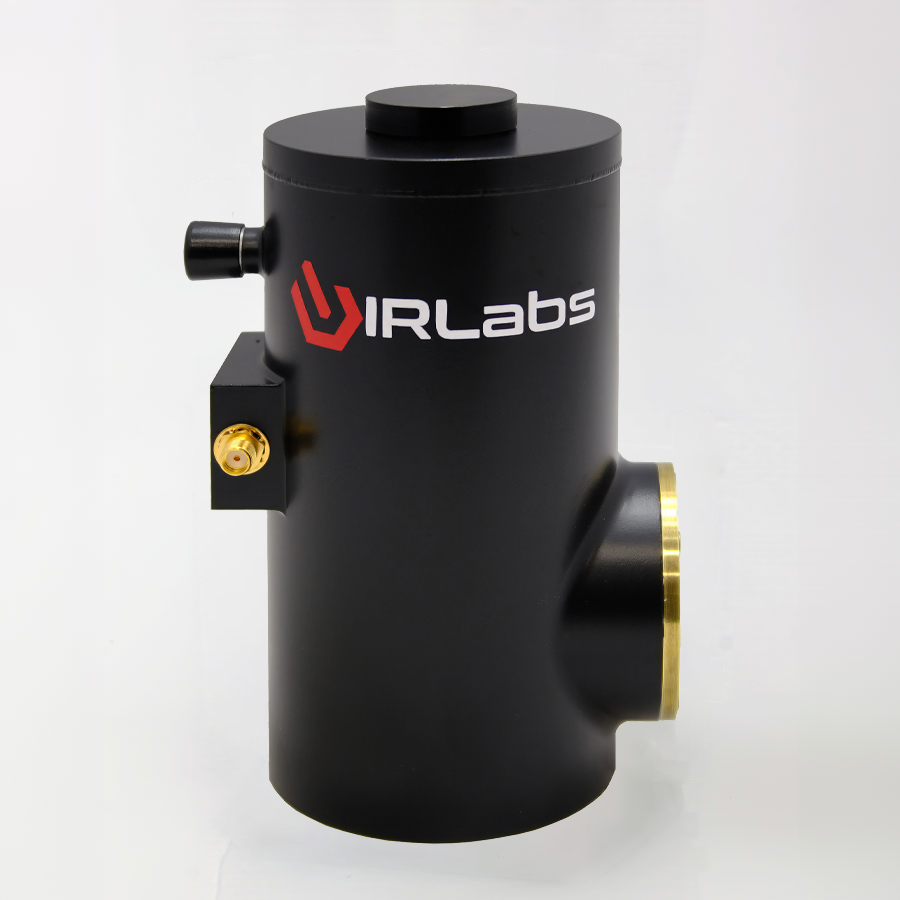
IRLabs custom-designs cryostats for varied requirements, including high-payload platforms, optical testing chambers, and atmospheric research environments.
Types of Cryogenic Cooling Systems
There are three primary types of cryogenic cooling systems in use today:
- Open-Cycle Cryogenic Systems
These use pour-filled liquid cryogens such as LN₂ or LHe. They are simple, affordable, and effective but require regular replenishment. This is a great fit for research environments where low vibration is critical. - Closed-Cycle Cryo Coolers (Cryogen-Free)
Mechanically cooled systems that eliminate the need for liquid cryogens. While initially more complex, they offer long-term cost savings and uninterrupted operation, making them ideal for OEM applications and long-duration experiments. - Hybrid Systems
Some systems incorporate both open and closed cycle systems, combining liquid cryogen and mechanical cooling to achieve rapid temperature control. These are often used in custom configurations that IRLabs engineers develop collaboratively with clients.
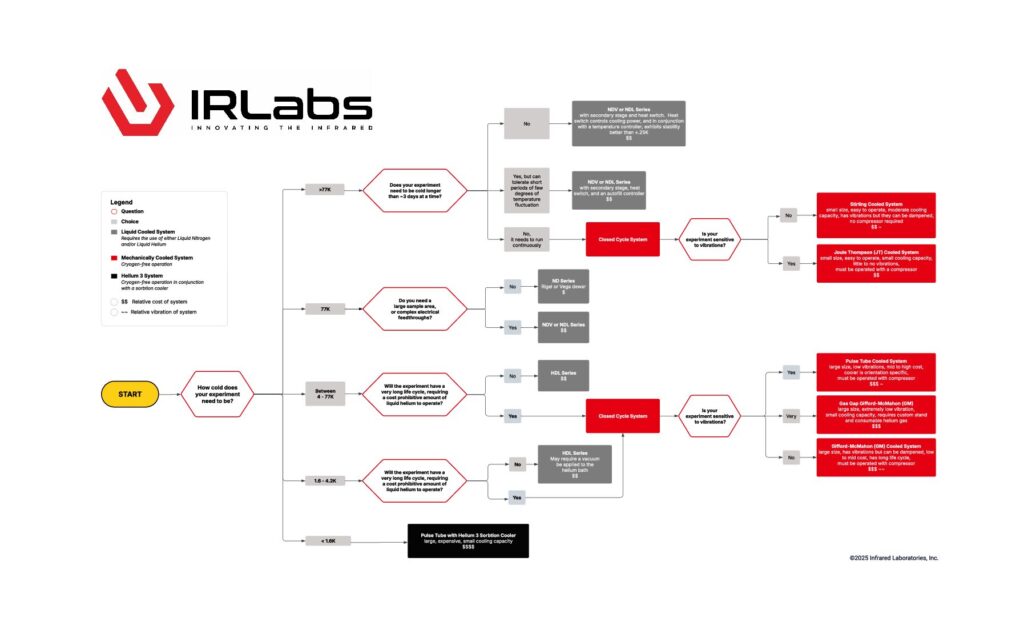
If you’re exploring your options, our Cryostats page is a great place to see system configurations that balance budget, performance, and maintenance requirements.
Applications of Cryostats in Scientific Research
Cryostats play a critical role in enabling breakthrough discoveries and technological advancement across multiple scientific fields. Their ability to minimize thermal noise and maintain precise low temperatures makes them indispensable in:
Quantum Computing
Cryogenic environments are essential for maintaining the coherence of quantum bits (qubits). Without ultra-cold temperatures, quantum processors would lose fidelity and functionality.
Infrared and Thermal Imaging
Sensitive IR detectors operate far more effectively in cryogenic conditions. By reducing thermal noise, cryocoolers allow for clearer, more accurate imaging in both defense and commercial applications. Explore our Bolometers & IR Detectors to see how cryogenic cooling is paired with state-of-the-art sensors.
Astronomy and Space Science
Ground-based telescopes require cryogenic systems to observe faint signals from distant galaxies. IRLabs has developed cryogenic systems for projects like the Large Binocular Telescope and NASA’s MIRSI instrument, demonstrating proven reliability in extreme research environments.
Choosing the Right Cryogenic Cooling System for Your Needs
Selecting the right cryostat depends on your specific scientific, technical, and operational needs. Here are key factors to consider:
- Required temperature range: Are you aiming for LN₂ levels (~77 K), LHe levels (~4 K), or millikelvin ranges or somewhere in between?
- System complexity: Do you prefer a hands-off cryogen-free system, or do you need something more manual and cost effective?
- Noise sensitivity: For vibration-sensitive applications (e.g., spectroscopy or quantum physics), an open-cycle liquid cryogen system may be better.
- Operational continuity: Cryogen-free systems excel at continuous operation with no warmups or refill interruptions.
Need help deciding? Our team at IRLabs can guide you through the options. Start with our Cryostats Overview or reach out via our contact page to discuss your application.
Ready to begin your next project? Connect with the team at IRLabs to get started.